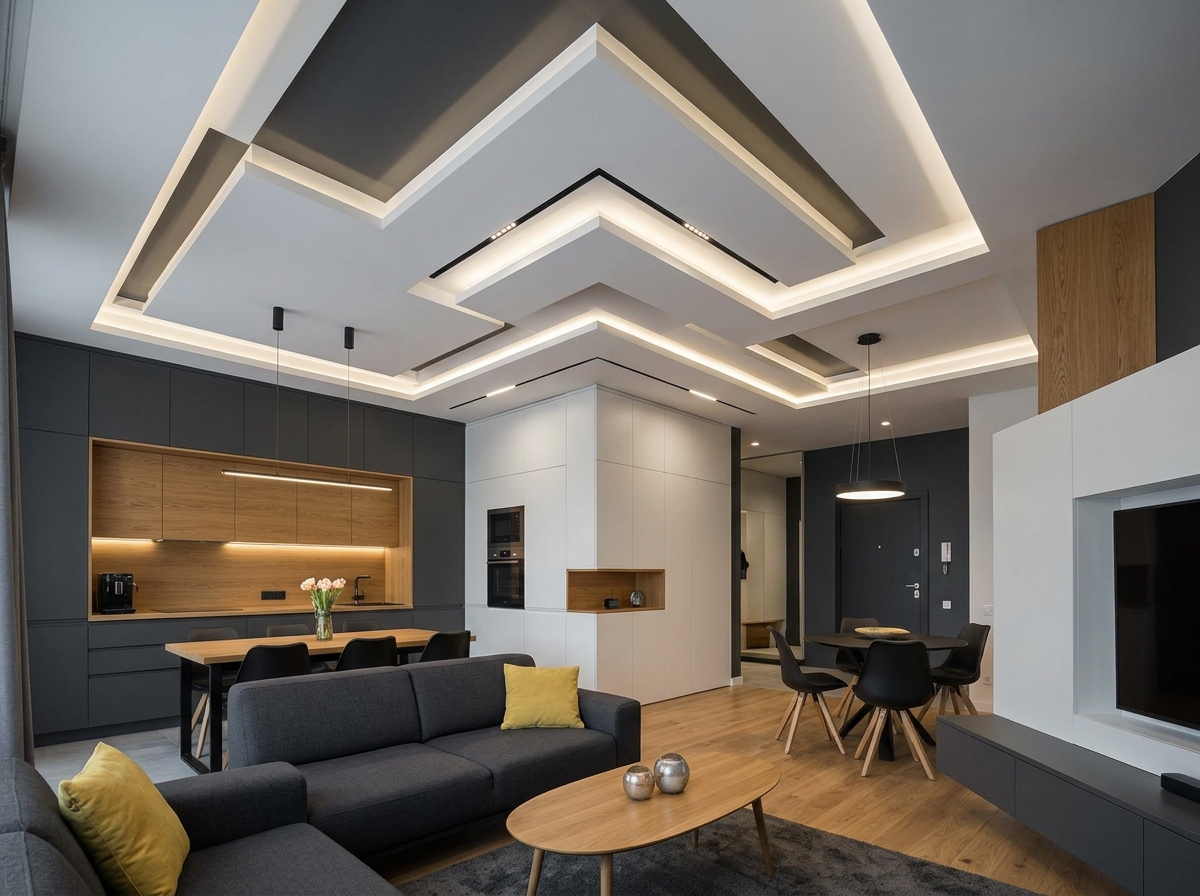
15 False Ceiling Design Ideas for a false ceiling is one of those upgrades that changes how a room feels without changing its footprint. Done well, it hides wiring, tucks in lighting, and adds real architectural depth. Done without planning, it just eats ceiling height for no real benefit. This guide covers 15 false ceiling design ideas in POP, gypsum and PVC, along with the height, material and cost basics you need before you commit to one.
Quick answer: Most false ceilings need a floor-to-ceiling clearance of at least 8.5–9 feet to look and feel right, since the false ceiling itself sits a few inches below the main structural ceiling. Gypsum board suits clean, layered modern designs and hides wiring easily; POP is best for curved, hand-molded detail; PVC is the go-to for moisture-prone rooms like kitchens and bathrooms. The 15 designs below are grouped by style and function so you can shortlist one before getting into material specifics.
Quick-Pick Table: All 15 Designs at a Glance
| # | Design | Material | Best room | Approx. cost tier |
|---|---|---|---|---|
| 1 | Simple flat POP ceiling | POP | Bedroom, hallway | Budget |
| 2 | Geometric POP pattern | POP | Living room, hall | Mid |
| 3 | Floating border POP | POP | Modern apartments | Mid |
| 4 | Double-panel layout | Gypsum | Small living rooms | Mid |
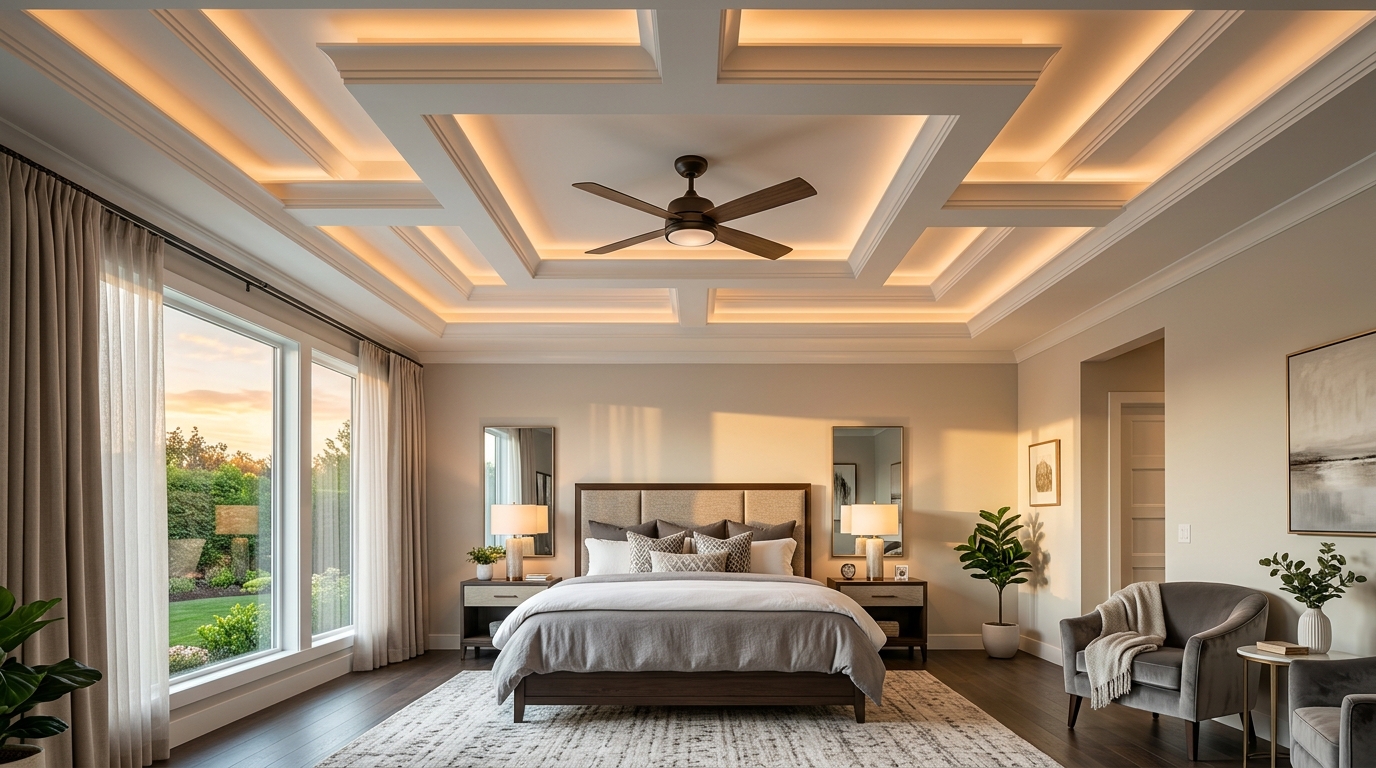
| 5 | Coffered ceiling | POP/gypsum | Large halls, high ceilings | High |
| 6 | Layered stepped gypsum | Gypsum | Living room, bedroom | Mid–High |
| 7 | Plus-minus raised/recessed panels | Gypsum | Living room | Mid |
| 8 | Cove ceiling with hidden LED | POP/gypsum | Living room, bedroom | Mid |
| 9 | Cornice border design | POP | Any room | Budget |
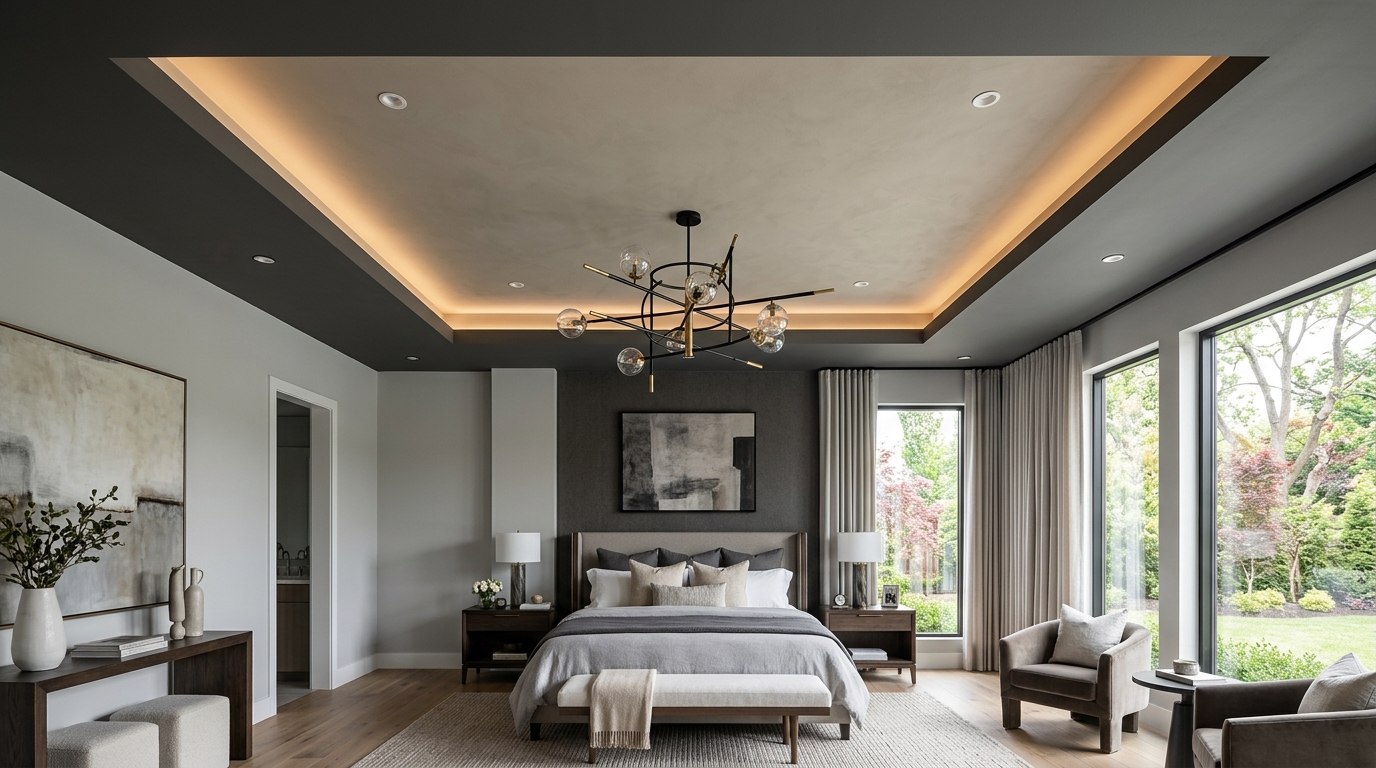
| 10 | Wooden-accent cove ceiling | Wood + gypsum | Living room, dining | High |
| 11 | Perforated acoustic ceiling | Gypsum/metal | Kitchen, office, study | Mid |
| 12 | PVC panel ceiling | PVC | Kitchen, bathroom, balcony | Budget |
| 13 | Bold color pop-design ceiling | Gypsum/POP | Kids’ room, statement room | Mid |
| 14 | Tray ceiling with center drop | Gypsum | Bedroom, living room | Mid–High |
| 15 | Grid false ceiling | Metal/gypsum | Home office, basement | Budget–Mid |
Minimalist and Geometric POP Designs
1. Simple Flat POP Ceiling
A single flat layer of POP with clean edges is the most affordable and versatile false-ceiling option. It suits bedrooms and hallways where the goal is a tidy, finished look rather than a visual statement.

2. Geometric POP Pattern
Squares, rectangles or circles arranged symmetrically or asymmetrically give a hall or living room a structured, modern look. Simple geometric POP designs work especially well in transitional spaces like hallways and corridors.

3. Floating Border POP
A raised POP border that appears to “float” a few inches below the main ceiling adds depth without covering the whole surface. It’s a popular choice for modern apartments where a full false ceiling isn’t practical due to lower ceiling height.

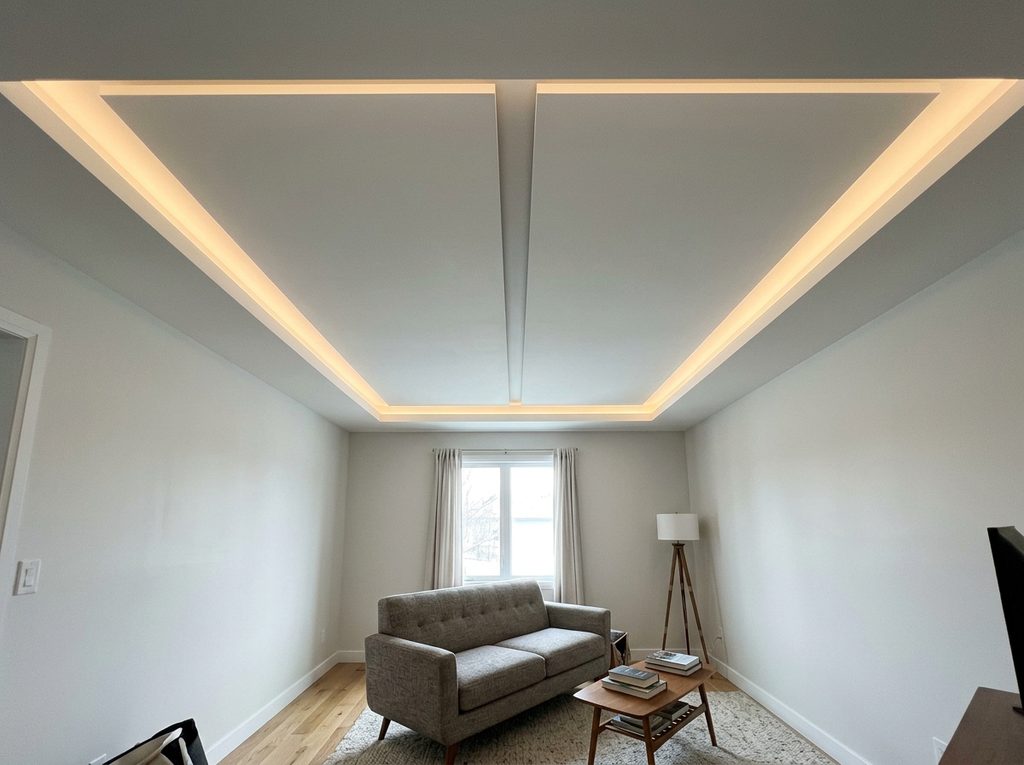
4. Double-Panel Layout
Splitting the ceiling into two panels, often with a gap or step between them, is a smart trick for smaller rooms — it visually adds height by drawing the eye across two distinct levels instead of one flat plane.
Layered and Coffered Designs
5. Coffered Ceiling
A grid of recessed square or rectangular sections creates real architectural depth, drawing the eye upward and making even large halls feel balanced. This design works best in rooms with high ceilings, since the coffers themselves take up vertical space. It’s a sturdy, long-lasting design when properly installed.

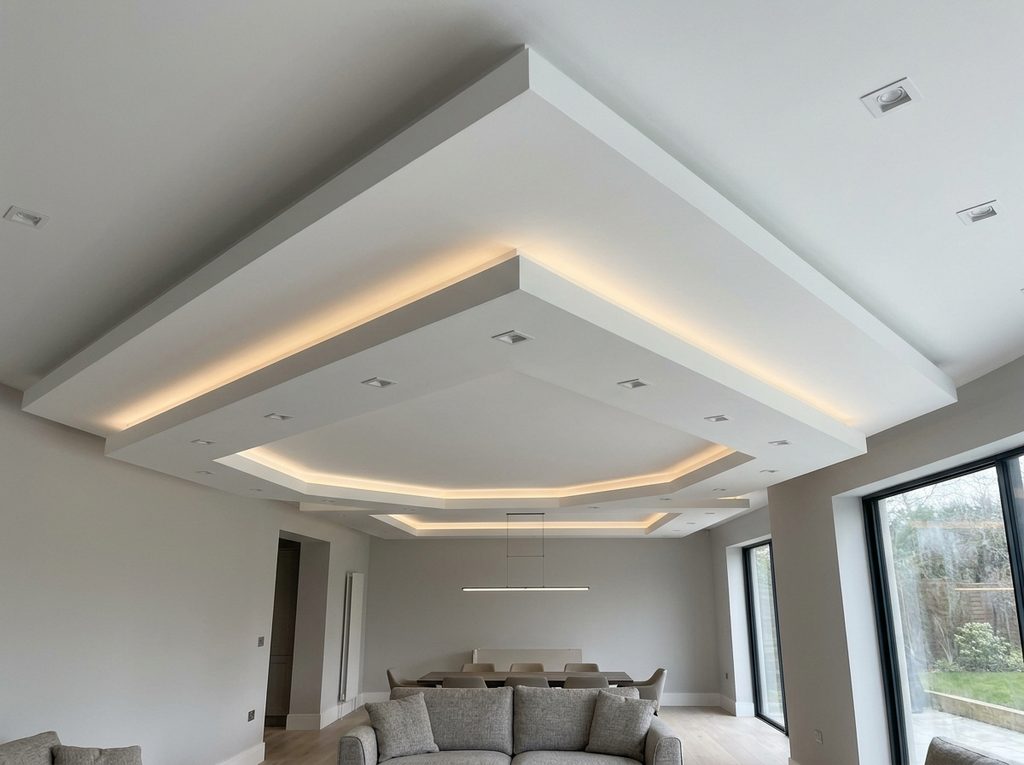
6. Layered Stepped Gypsum
Multiple gypsum layers stepping down from the main ceiling create a tiered look that’s cleaner and more precise than hand-molded POP, since gypsum boards come factory-finished and consistent.
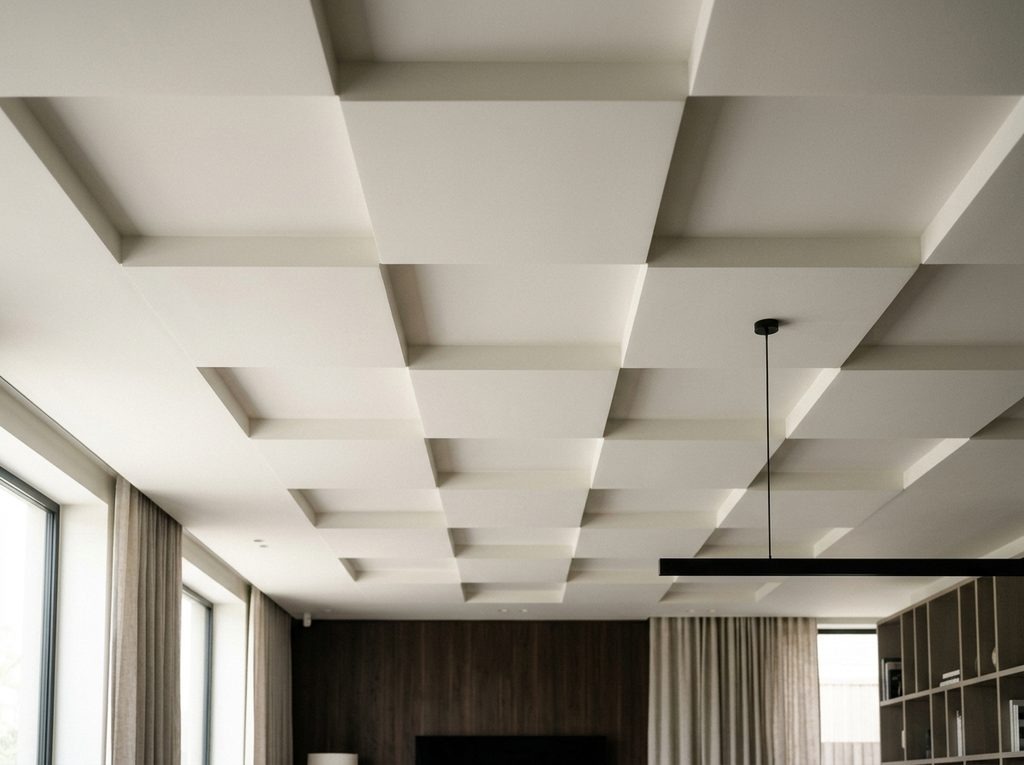
7. Plus-Minus Raised/Recessed Panels
Alternating raised and recessed sections play with how light hits the ceiling, creating subtle depth. Pairing this with a matte or satin finish keeps the focus on the ceiling’s shadow-and-light effect rather than a glossy surface competing for attention.
Cove-Lit and LED-Integrated Designs
8. Cove Ceiling with Hidden LED
A curved or stepped edge conceals LED strip lighting, creating a soft ambient glow around the room’s perimeter. This is one of the most requested modern false-ceiling features because it upgrades the room’s lighting without visible fixtures.

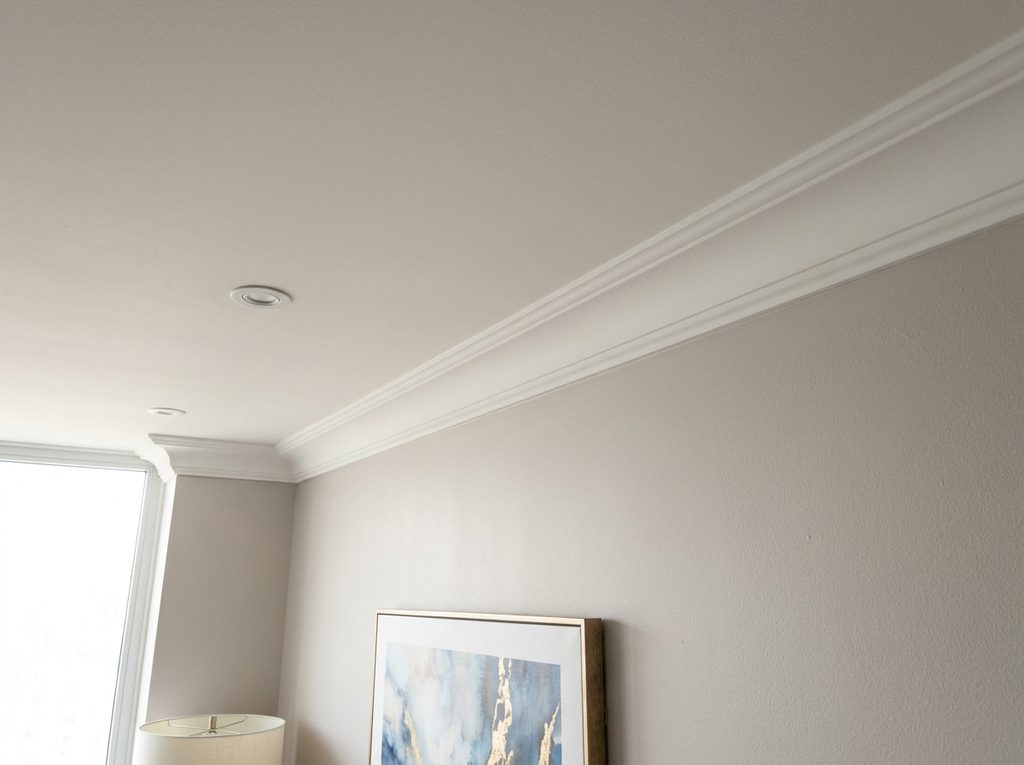
9. Cornice Border Design
A simple POP cornice neatly covers the joint between the false ceiling and the wall, hiding an imperfection while doubling as a subtle design detail. It’s an easy, low-cost addition to almost any other design on this list.
10. Wooden-Accent Cove Ceiling
Combining a gypsum cove with wood-tone accents or slats adds warmth to what can otherwise be a very white, clinical-feeling false ceiling. It suits living and dining rooms where you want a softer, more natural look.

Functional Designs
11. Perforated Acoustic Ceiling
Tiny holes or intricate perforated patterns let air and sound pass through, improving ventilation and reducing noise levels. This makes it a smart choice for kitchens, home offices, or any room where airflow and quiet both matter.

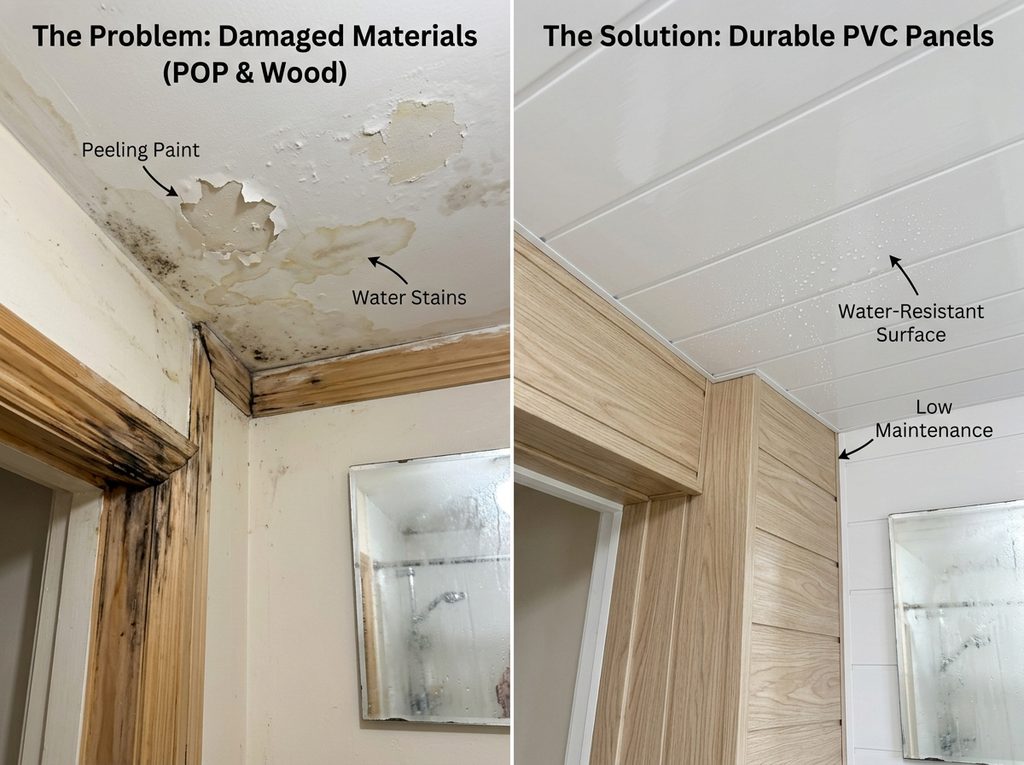
12. PVC Panel Ceiling
PVC is lightweight, water-resistant and low-maintenance, which makes it the standard recommendation for kitchens, bathrooms and balconies where humidity would damage POP or wood over time. It’s also one of the more budget-friendly options on this list.
Statement and Bold Designs
13. Bold Color Pop-Design Ceiling
Vibrant colors, playful shapes and fun patterns turn the ceiling into a genuine focal point rather than a background surface. This works especially well in kids’ rooms or any space where you want personality and energy.

14. Tray Ceiling with Center Drop
A tray ceiling steps up toward the center, creating a framed, layered look overhead. It reads as more architectural than a flat design and suits bedrooms or living rooms with adequate height.

15. Grid False Ceiling
A suspended metal or gypsum grid holding removable panels is practical rather than decorative, and it’s the standard choice for spaces like home offices or basements where easy access to wiring above the ceiling matters more than an elaborate finish.

How to Choose a False Ceiling Design
Minimum Height Requirement
A commonly cited guideline is a floor-to-false-ceiling gap of roughly 8.5 to 9 feet, referenced against national building byelaws in some sources. Since the false ceiling itself sits below your main structural ceiling, rooms with lower original ceiling height should stick to simpler, flatter designs (a flat POP layer or a floating border) rather than deep, multi-layer designs like coffered or tray ceilings.
Material Comparison
| Material | Strengths | Watch out for | Best rooms |
|---|---|---|---|
| POP (Plaster of Paris) | Highly moldable, good for curves and cornices | Slower to install and cure; less water-resistant | Living room, hall, bedroom |
| Gypsum board | Lightweight, consistent, easy to layer, hides wiring well | Less suited to intricate hand-molded curves than POP | Living room, bedroom |
| PVC | Water-resistant, low-maintenance, budget-friendly | Less premium look than POP or wood | Kitchen, bathroom, balcony |
| Perforated (gypsum/metal) | Improves ventilation and sound absorption | More technical installation; fewer decorative options | Kitchen, home office, study |
Matching Material to Room
Moisture-prone rooms — kitchens, bathrooms, balconies — do best with PVC, since POP and untreated gypsum are more vulnerable to humidity damage over time. Living rooms and halls suit POP or gypsum where design detail matters more than moisture resistance. Home offices and utility spaces benefit from perforated or grid designs where function outweighs decoration.
How Much Does a False Ceiling Cost?
Costs vary by material, design complexity, room size and labor rates, and the figures I found while researching ranged from around Rs. 53 per sq ft for a simple POP tray ceiling service listing, up to Rs. 150–170 per sq ft for a more detailed coffered POP design — a real illustration of how much design complexity moves the price, even within the same material. Use this as a guide to what actually drives the cost rather than a fixed number:
- Design complexity: a flat, single-level ceiling costs far less than a coffered, layered, or multi-tier design.
- Material: PVC and simple POP tend toward the lower end; detailed gypsum layering and wood accents cost more.
- Lighting integration: cove lighting or LED strips add both material and labor cost.
- Room size and access: larger rooms and ceilings needing scaffolding cost more overall, even if the per-square-foot rate looks similar.
Get a local, written quote before budgeting, since published per-square-foot figures vary significantly between vendors, regions and design complexity.
Maintenance and Lifespan
A well-installed false ceiling can last a long time — some sources cite up to 20 years — but this depends heavily on regular maintenance and keeping the material away from water exposure. Regular dusting keeps most designs looking fresh, and ceilings with a lustre or painted finish can usually be wiped with a damp cloth to restore shine. POP in particular should be kept away from leaks or high humidity, since it’s more prone to water damage than PVC or well-sealed gypsum.
DIY vs. Professional Installation
False ceiling installation — whether POP, gypsum, or PVC — involves structural framing and, in most designs, coordinated electrical work for lighting. This is not typically a DIY project; professional installation is strongly recommended for anything beyond a very simple flat panel, both for a clean finish and for safety around electrical fittings and structural fixing points.
FAQ
How much does a false ceiling cost per square foot?
It varies by material and design complexity. Research turned up figures from around Rs. 53 per sq ft for a simple POP design up to Rs. 150–170 per sq ft for a detailed coffered design — get a local quote for your specific design and room size.
What is the ideal height for a false ceiling?
A floor-to-false-ceiling gap of roughly 8.5 to 9 feet is commonly recommended so the room doesn’t feel cramped once the false ceiling is installed.
Is POP or gypsum better for a false ceiling?
POP is more moldable for curved, hand-detailed designs but is slower to install and more sensitive to water. Gypsum is lightweight, consistent and easier to layer, and it’s often preferred for hiding wiring cleanly.
How long does a false ceiling last?
Some sources cite up to 20 years, but this depends heavily on the material and how well it’s maintained, especially around moisture exposure.
Is a false ceiling good for ventilation and acoustics?
Perforated false ceiling designs specifically improve airflow and reduce noise, making them a good choice for kitchens, offices or any room where both matter.
Which material is best for a false ceiling in a kitchen or bathroom?
PVC is generally the top choice for moisture-prone rooms, since it resists water damage better than POP or untreated gypsum.
Can I install a false ceiling myself?
Simple flat panel designs might be manageable for an experienced DIYer, but most false ceiling work involves structural framing and electrical coordination, so professional installation is strongly recommended.
Conclusion
The right false ceiling design depends on your room’s height, your budget, and how much architectural detail you want. Simple flat POP or PVC panels give a clean, affordable finish with no fuss. Coffered, layered gypsum, or cove-lit designs add real drama but need adequate ceiling height and professional installation. Use the comparison table above to shortlist two or three ideas, check the height requirement for your room, and get a written local quote before committing.
Publishing notes (for you):
- I did not treat the Rs. 53/sq ft and Rs. 150–170/sq ft figures as universal — they came from a specific vendor listing and a specific brand’s blog post, so present them as market examples, not guaranteed pricing, and verify current local rates before publishing.
- The 8.5–9 ft height guideline is referenced against “national building byelaws” in one source (Livspace); verify this against the actual byelaws document or a construction-code source for your target market before stating it as fact.
- The “up to 20 years” lifespan claim is repeated across sources but not clearly sourced — I kept it hedged with “depends on maintenance” rather than presenting it as guaranteed.
- Add real photos or credited images for each of the 15 designs, with descriptive alt text.
- Add a genuine author bio, and manually check LordDecor’s live “15 False Ceiling Design Ideas” page (I couldn’t fetch it directly) to make sure this article covers anything it does that I couldn’t verify.
You are out of free messages until 12:00 AM
One thought on “15 False Ceiling Design Ideas for a Stylish, Functional Home”