
Discover 15 Plant Stand Decor Ideas to beautifully display your indoor plants. Explore stylish, creative, and easy ideas for every home decor style. A plant stand can do more for a room than almost any other small piece of furniture. It lifts your greenery off the floor, adds height and structure to a flat corner, and turns a handful of potted plants into an arrangement that actually looks designed rather than scattered. But here’s the catch: buying a plant stand is easy. Styling one so it looks intentional, balanced, and “finished” is the part most people get stuck on.
This guide walks through 15 plant stand decor ideas you can use no matter your style, budget, or space — plus practical guidance on which plants pair best with which stands, how to style by room, and the small mistakes that quietly make a plant corner look unfinished.
How to Choose the Right Plant Stand for Your Style
Before you start styling, it helps to know what your stand’s material is already “saying” about your room. Different materials naturally lean toward different aesthetics, and picking one that matches your existing furniture makes everything else easier.
| Material | Best For | Feel | Indoor/Outdoor |
|---|---|---|---|
| Light wood (oak, pine) | Scandinavian, minimalist, coastal | Warm, natural | Both, with sealant outdoors |
| Dark wood (walnut) | Mid-century modern, traditional | Rich, grounded | Indoor preferred |
| Black metal | Modern, industrial, minimalist | Sharp, structured | Both |
| Rattan/wicker | Boho, coastal, cottagecore | Casual, textured | Indoor / covered outdoor |
| Marble or stone top | Glam, luxury, formal | Cool, refined | Indoor |
| Concrete | Industrial, modern, brutalist | Architectural, raw | Both |
| Wire/thin metal | Minimalist, airy, transitional | Light, almost invisible | Both |
None of these are rules — they’re starting points. The goal is simply to make sure the stand doesn’t fight the room it’s in.
15 Plant Stand Decor Ideas
1. Anchor a Corner with One Statement Plant
Instead of clustering several small plants, place a single tall, dramatic plant — a fiddle leaf fig, bird of paradise, or rubber plant — on a simple stand in an empty corner. One well-placed statement plant often does more for a room than five smaller ones grouped together, and it keeps the space from feeling cluttered.

2. Build a Boho Corner with Rattan and Macramé
Pair a woven rattan stand with a macramé plant hanger above it, then fill in with trailing pothos or string of pearls. Mix in a textured ceramic pot and a woven basket accent nearby. The layered textures — cord, rattan, ceramic — are what give boho styling its relaxed, collected-over-time look.

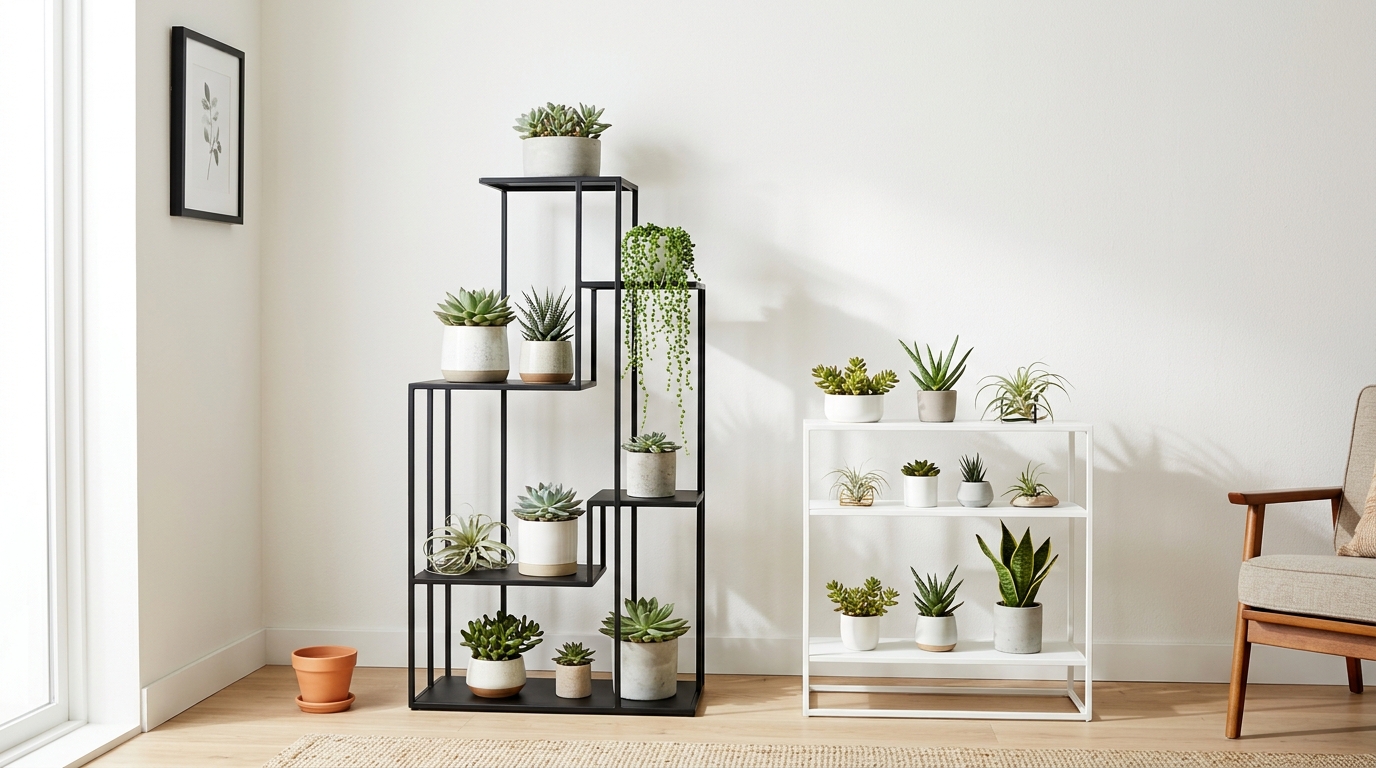
3. Go Monochrome with Black Metal and Structured Plants
A black metal stand paired with snake plants or ZZ plants in matte black or white pots creates a clean, architectural look that suits modern and minimalist interiors. Keep the plant shapes structured rather than trailing so the stand’s clean lines stay visible.
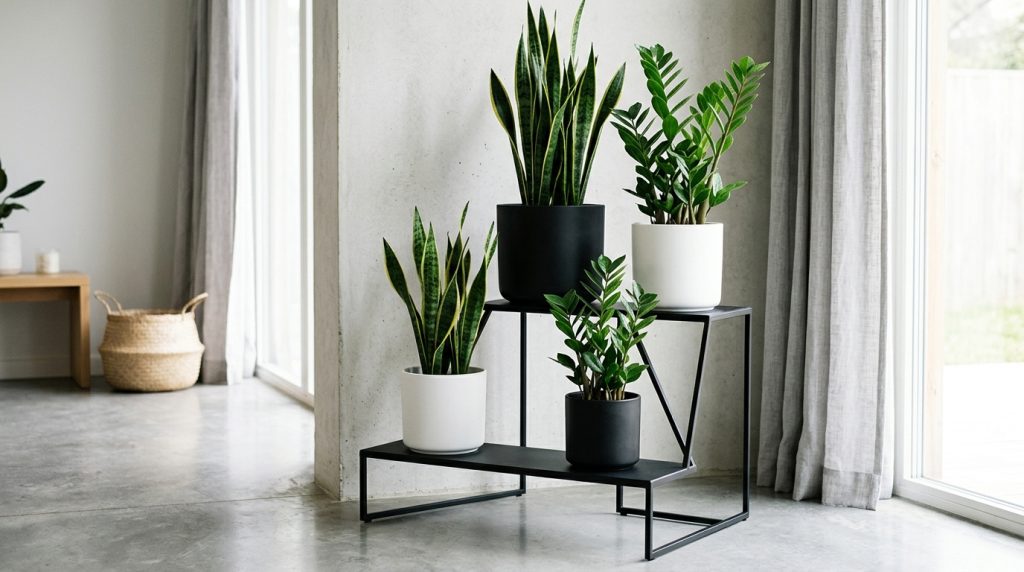
4. Create a Tiered Herb Display for the Kitchen
Use a multi-tier stand to hold potted herbs like basil, thyme, and mint near a kitchen window. Label each pot with a small wooden or chalkboard tag. This idea does double duty — it’s decorative and genuinely useful, which is part of why it photographs so well.

5. Mix Heights Instead of Lining Plants Up Evenly
One of the simplest ways to upgrade a plant corner is to stop placing every pot at the same height. Combine a floor plant, a mid-height stand, and a smaller tabletop planter so the eye moves up and down instead of across a flat line.

6. Pair Marble or Stone-Top Stands with a Single Specimen Plant
A marble-topped stand works best when it isn’t crowded. Use it to showcase one refined plant — an orchid, a small palm, or a trailing pothos in a white ceramic pot — for a glam, editorial look rather than a full plant collection.

7. Use a Vintage or Repurposed Piece as Your Stand
An old stool, ladder, or side table can work beautifully as a plant stand once it’s cleaned up and restyled. Repurposed furniture tends to feel more personal and collected than something bought specifically for the job, which is part of what makes it stand out in a room.

8. Layer Plant Types for a More Natural Look
Rather than using identical plants on every tier, combine one tall structured plant, one medium bushy plant, and one trailing variety. This mix of shapes is what separates a styled plant display from a random collection of pots — it mimics how plants actually grow together outdoors.

9. Add a Non-Plant Accent to Finish the Display
A small candle, a stack of books, a ceramic tray, or a sculptural object placed beside your plants makes the whole arrangement feel intentional instead of purely functional. This is a small detail, but it’s often the difference between a plant corner that looks “done” and one that looks like a work in progress.
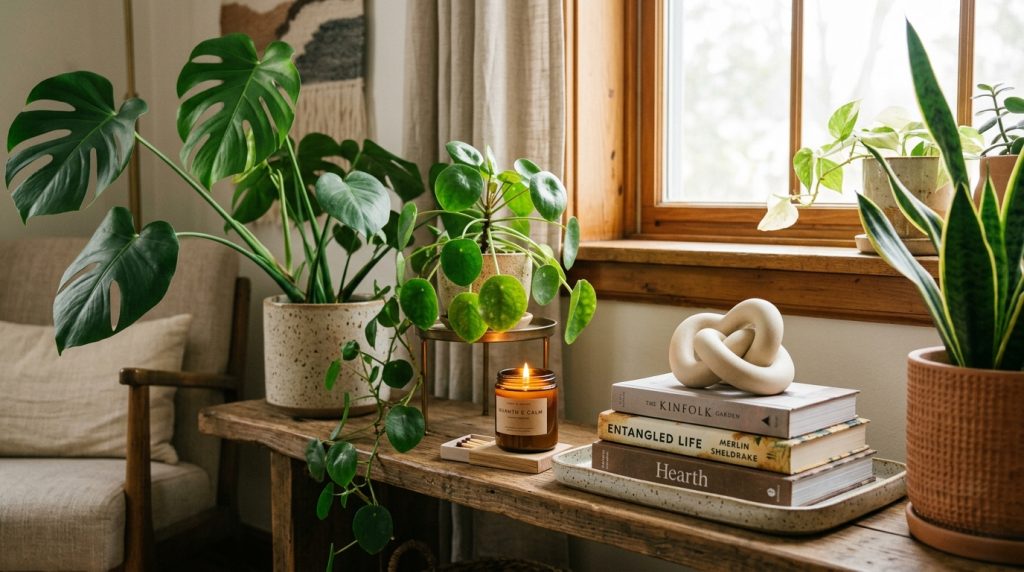
10. Match Wood Tones to Your Existing Furniture
If your room already has warm wood furniture, choose a plant stand in a similar tone rather than introducing a clashing finish. Consistency in wood tone is a quiet but effective way to make a plant stand look like it belongs in the room rather than sitting apart from it.
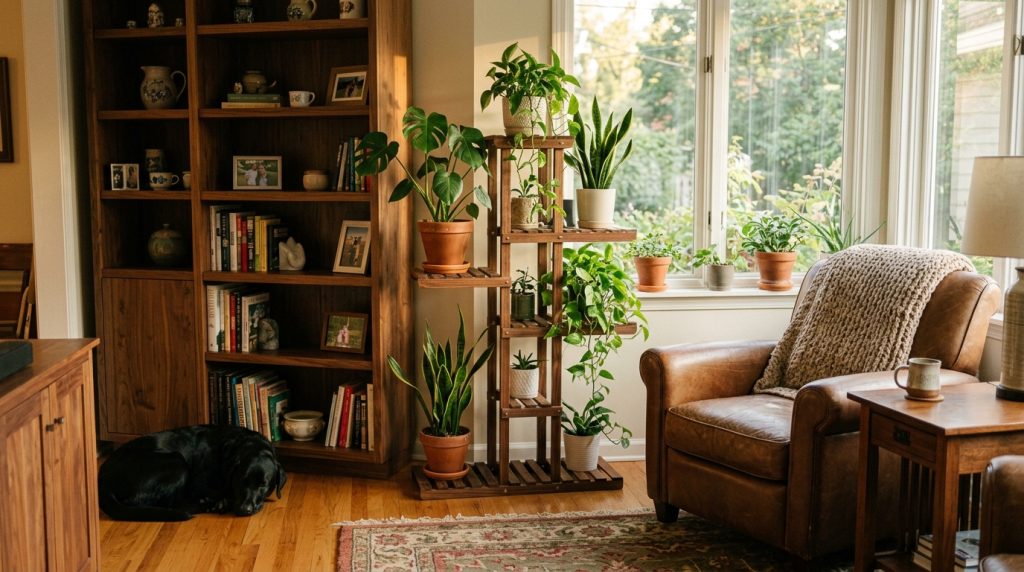
11. Use Wire or Thin Metal Stands to Keep a Small Space Feeling Open
In compact rooms, a wire or slim metal stand takes up far less visual space than a bulky wooden one. The plant appears to float, which helps a small room feel less crowded while still giving greenery some height.
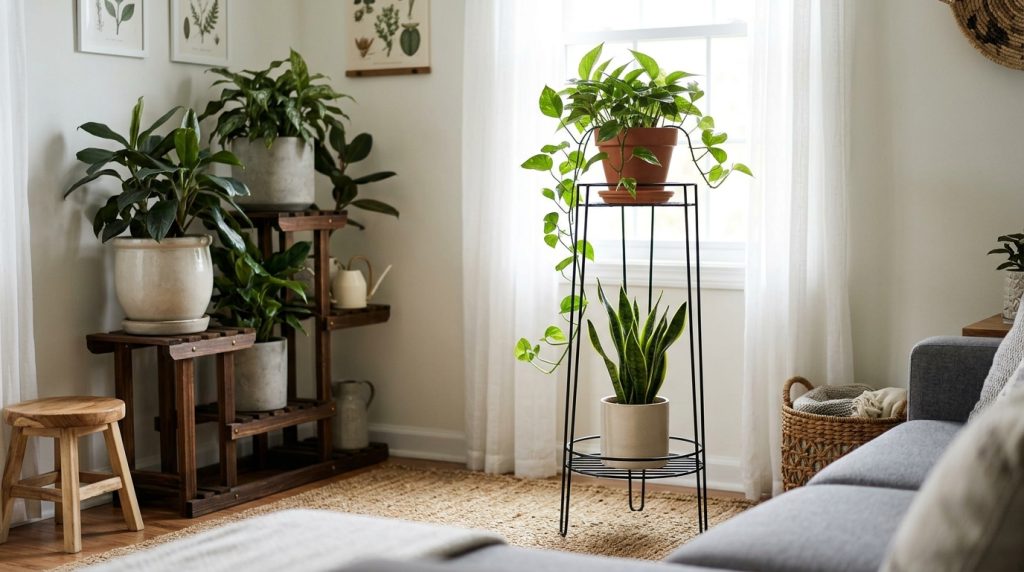
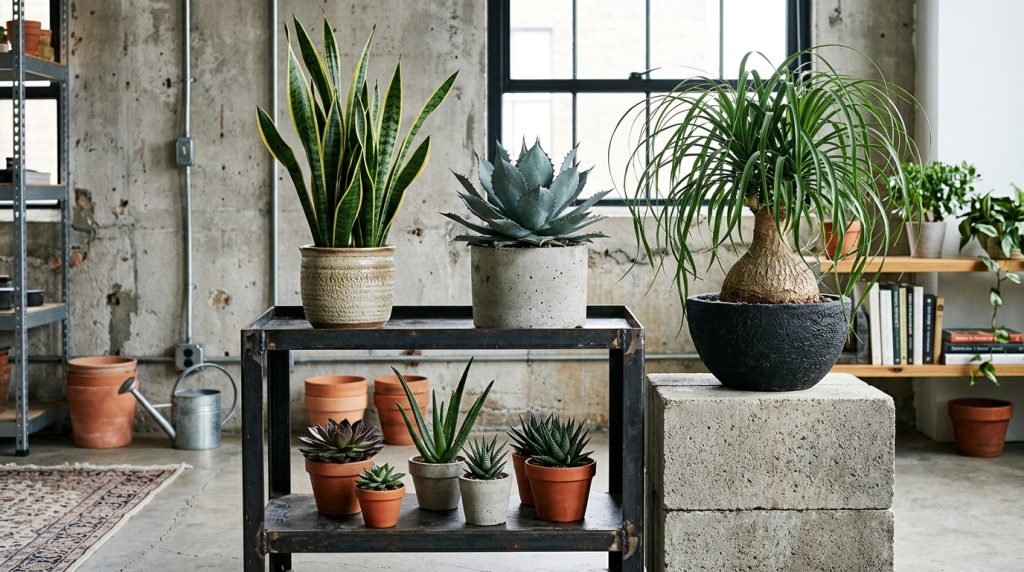
12. Style a Concrete or Industrial Stand with Structural Greenery
Pair a concrete block or raw metal stand with plants that have strong, architectural shapes — snake plants, ponytail palms, or sculptural succulents. Soft, delicate plants tend to get visually lost against industrial materials, while bold shapes hold their own.
13. Create a Reading-Nook Plant Corner
Place a mid-height plant stand beside an accent chair, paired with a small side table for a book or mug. This turns a plant display into part of a lived-in scene rather than an isolated decor object, and it’s one of the easiest ways to make a plant stand feel purposeful.

14. Rotate Seasonal Accents Around a Permanent Stand
Keep your plant stand as a fixed piece, but swap what’s around it with the seasons — dried leaves and small pumpkins in fall, pinecones or greenery in winter, fresh flowers in spring. This keeps a single stand feeling fresh year-round without buying new furniture.

15. Use a Cart or Rolling Stand for Flexible Styling
A rolling plant cart lets you move your display to chase sunlight or rearrange a room without lifting heavy pots individually. It’s a practical choice for renters or anyone who likes to change their layout often, and the lower shelf doubles as extra storage or display space.

How to Choose the Right Plants for Your Stand
Not every plant works on every type of stand, and matching plant shape to stand style makes a noticeable difference.
Best plants for tiered stands:
- Snake plant, ZZ plant, and other upright plants for lower or middle tiers
- Pothos, ivy, or string of pearls for upper tiers, where they can trail downward
- Small succulents or air plants for narrow top shelves
Structured vs. trailing plants: Structured plants (snake plant, ZZ plant, fiddle leaf fig) hold a clean silhouette and work well on modern or minimalist stands where you want clean lines to stay visible. Trailing plants (pothos, ivy, string of pearls) soften edges and add movement, which is especially useful on boho or rustic stands where a looser, more organic look is the goal. Most well-styled displays use a mix of both rather than one or the other exclusively.
Styling by Room
Living Room: A medium-to-tall stand beside an accent chair, sofa, or console table helps a plant feel connected to the furniture around it rather than randomly placed. Pairing the stand with a candle or decorative tray nearby ties it into the rest of the room’s styling.
Bedroom: Lower-maintenance plants like snake plants or pothos on a simple stand near a window work well in bedrooms, where you generally want a calmer, less visually busy display than in a living room.
Entryway: A tall, narrow stand near the front door makes a strong first impression without taking up much floor space — ideal for hallways and entryways where square footage is limited.
Kitchen: Tiered stands near a window are well suited to herbs, since they combine decor with something genuinely useful.
Balcony & Patio: Weather-resistant materials — sealed wood, metal, or concrete — hold up best outdoors. Layering a tall planter at the back with medium and trailing plants toward the front creates depth even in a small outdoor footprint.
Common Plant Stand Styling Mistakes to Avoid
- Using too many small plants together. A cluster of tiny pots can start to look visually noisy. A few well-chosen plants at varied heights usually reads as more intentional than many small ones.
- Matching every planter exactly. Identical pots across the board can make a display feel stiff. A little variation in texture or color keeps it interesting.
- Skipping height variation. Plants placed at the same level tend to blend together. Mixing floor plants, stands, and tabletop pots creates visual movement.
- Overcrowding the display. Plants — and the objects around them — need breathing room. Leaving a little empty space often makes an arrangement look more considered, not less.
- Ignoring natural light. No amount of styling makes up for a plant that’s struggling in the wrong light. Place stands where the plant will actually thrive, then style around that.
- Choosing a stand that’s too short for the space. A low stand can visually disappear into a room. If a corner feels empty, a taller stand often solves it better than more plants.
Seasonal Plant Stand Styling Ideas
You don’t need to change your plants every season — just what’s around them. In fall, add small pumpkins, dried leaves, or a warm-toned throw nearby. In winter, pair evergreen cuttings or pinecones with soft lighting. In spring and summer, swap in fresh-cut flowers in a small vase beside your plants, or lean into brighter, lighter-colored pots. This approach keeps a plant stand feeling current without any structural changes.
Frequently Asked Questions
How do I decorate my plant stand? Start by matching the stand’s material to your room’s existing style, then layer plants at different heights and mix structured shapes with trailing ones. Finish with one small non-plant accent, like a candle or tray, so the display feels complete rather than purely functional.
What can I put on a plant stand besides plants? Candles, small trays, stacked books, and sculptural or decorative objects all work well alongside plants and help the display feel more like intentional styling than a plant shelf.
What plants look good on a plant stand? Snake plants, pothos, ivy, peace lilies, fiddle leaf figs, and rubber plants are all popular choices. Mixing one structured plant with one trailing plant usually creates the most balanced look.
How do you style a tiered plant stand? Place larger, heavier plants on the lower tiers for stability, and use the upper tiers for smaller plants or trailing varieties that can spill over the edge. Varying plant type and pot texture across tiers keeps the display from feeling repetitive.
Are plant stands necessary? Not strictly — a windowsill or shelf with enough light works too. But plant stands are useful when you don’t have surface space near a light source, and many people use them simply because of how they look, since a raised display adds height and structure a floor-level pot can’t.
What’s the best material for a plant stand for my decor style? Rattan and light wood suit boho and coastal interiors, black metal and concrete work well in modern or industrial spaces, dark wood fits mid-century and traditional rooms, and marble or stone tops lean glam and luxury.
How do I decorate a plant stand for each season? Keep the stand and plants as your constant, and rotate small seasonal accents around them — dried leaves or pumpkins in fall, greenery or pinecones in winter, fresh flowers in spring and summer.
How tall should a plant stand be for the best visual effect? There’s no fixed rule, but stands in the roughly 12- to 36-inch range tend to create the most visual interest, especially when paired with plants of varying heights nearby.
Conclusion
A well-styled plant stand isn’t about owning more plants — it’s about placing the ones you have with a little more intention. Vary your heights, mix your textures, match your materials to your room, and leave a little breathing room around each display. Start with one corner, try one idea from this list, and build from there. The most inviting plant displays are rarely the most complicated ones; they’re just the most thoughtfully arranged.
3 thoughts on “15 Plant Stand Decor Ideas to Style Your Indoor Jungle Like a Pro”