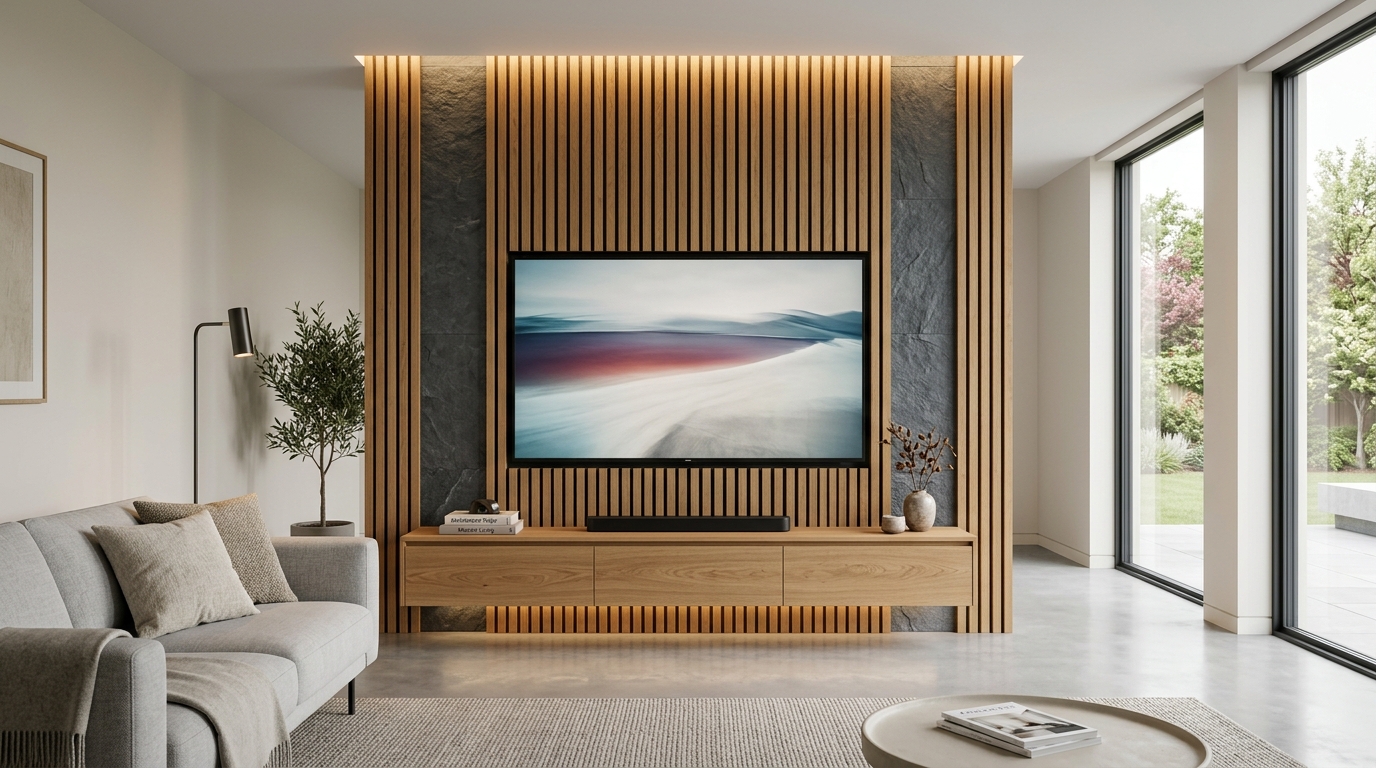
25 Modern TV Wall Design Ideas TV wall can be one of two things: a flat screen bolted to a blank wall, or the focal point of the entire room. The difference usually comes down to a few basics — the right proportions, the right height, and cables that are actually planned for — combined with a design idea that fits your style. Below are 25 modern TV wall ideas, along with the practical groundwork that makes any of them look intentional instead of accidental.
Getting the Basics Right First
Before picking a style, it helps to get three things roughly right, since they affect how good any design will look in practice.
Proportion: As a general guideline, a TV looks best when it takes up no more than about a sixth of the wall’s width and height, so it doesn’t overwhelm the space. A wall that’s too small for the TV will always look cramped, no matter how nice the finish is.
Height: Most rooms work well with the center of the screen close to eye level when seated — commonly somewhere around 40–42 inches from the floor, though this shifts up or down depending on your seating and ceiling height.
Viewing distance: A common rule of thumb is to sit somewhere between roughly 1.5 and 2.5 times the screen’s diagonal size away from it. This can help you judge whether a screen will feel too big or too small in a given room before you commit to a wall design around it.
These aren’t strict rules, just useful starting points to sanity-check before you build anything permanent.
Minimalist & Floating TV Walls
1. Floating console, nothing on the floor — A wall-mounted console with the TV above it, leaving the floor completely visible underneath. It reads as more open and easier to clean than a floor-standing unit.

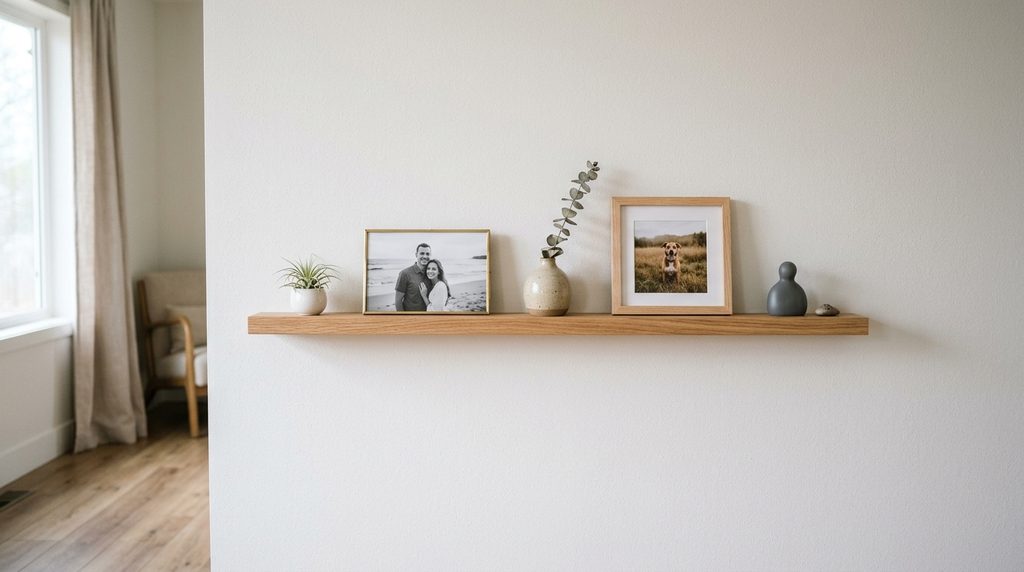
2. Single floating shelf, nothing else — Just one slim shelf beneath the TV for a remote and a speaker — the simplest version of a minimalist wall.

3. All-white wall and console — A calm, unified white palette that lets the room feel bright and uncluttered, with the TV as the only real contrast point.

4. Matte black console against a light wall — A dark, low-profile unit paired with a pale wall creates quiet contrast without needing any extra decoration.

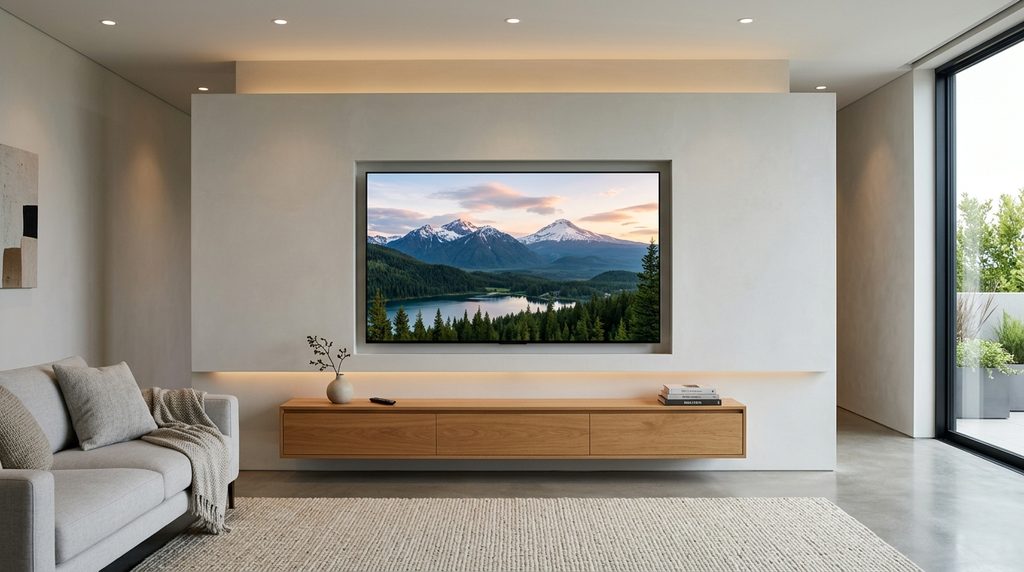
5. Recessed wall niche — The TV sits flush inside a shallow recess built into the wall, so it doesn’t protrude — a more architectural, built-in version of minimalism.
6. Slim wall-mounted shelf ledge — A single narrow ledge above or below the screen for rotating a few framed photos or small objects, without committing to full shelving.
Wood & Natural Texture TV Walls
7. Vertical wood slat wall — Thin timber strips installed edge to edge behind the TV, adding rhythm and warmth while doubling as a way to conceal wiring inside the gaps.

8. Warm oak floating shelves — Natural wood shelving on either side of the TV, offering a softer, more textured alternative to an all-white or all-black setup.

9. Wood paneling with the TV mounted on top — Paneling installed across the wall with the screen simply mounted over it, blending modern electronics into a warmer, more traditional material.
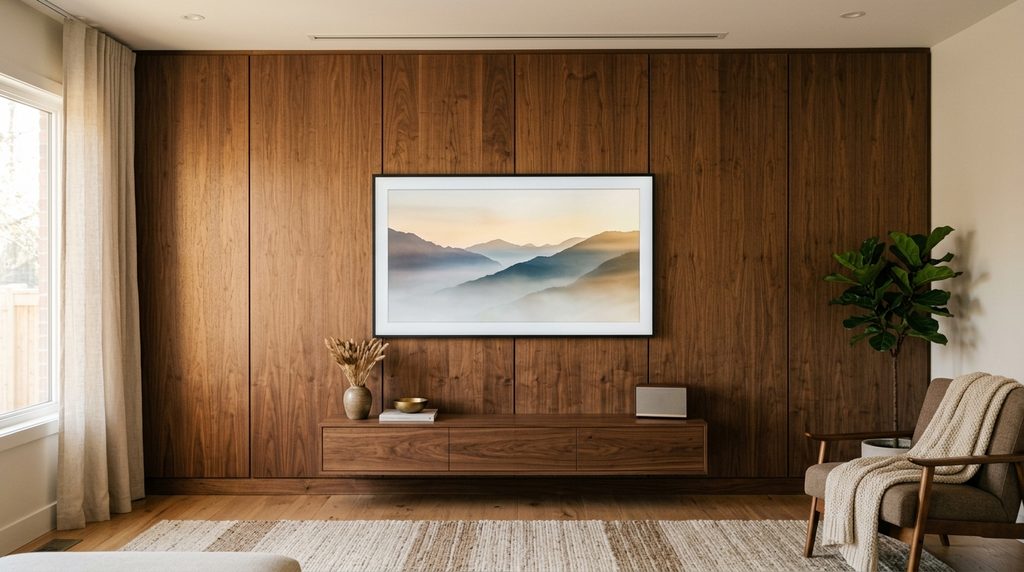
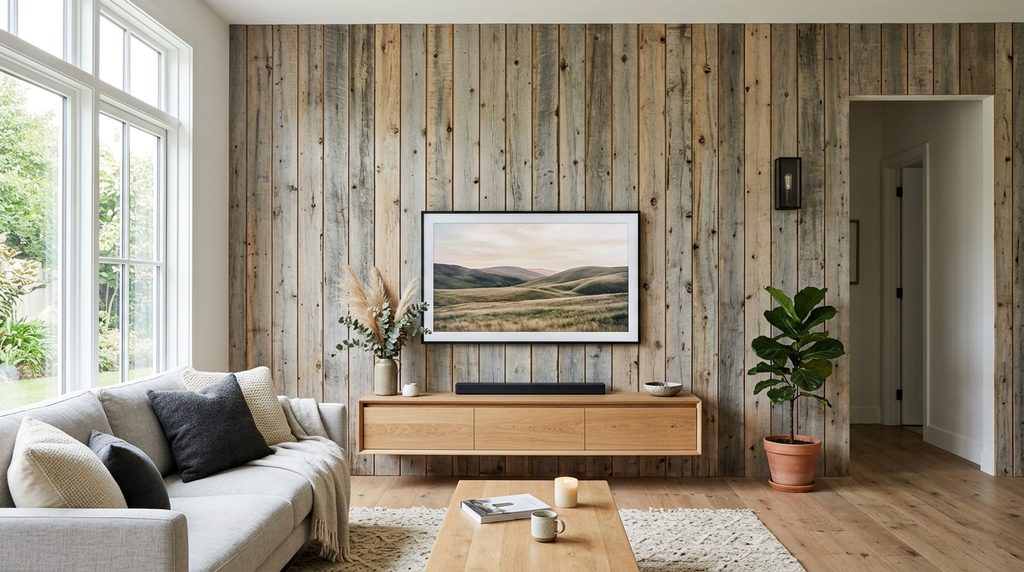
10. Reclaimed or rustic wood backdrop — Slightly weathered timber boards behind the screen for a farmhouse-adjacent feel that still reads as current.
11. Japandi-style low wood console — A wide, low unit in natural wood with clean lines and rounded edges, paired with a plain wall for a calm, Scandinavian-Japanese look.

Bold & Dark Accent TV Walls
12. Charcoal or navy accent wall — A deep, saturated paint color behind the TV that reduces glare and screen reflections while making the room feel more dramatic.

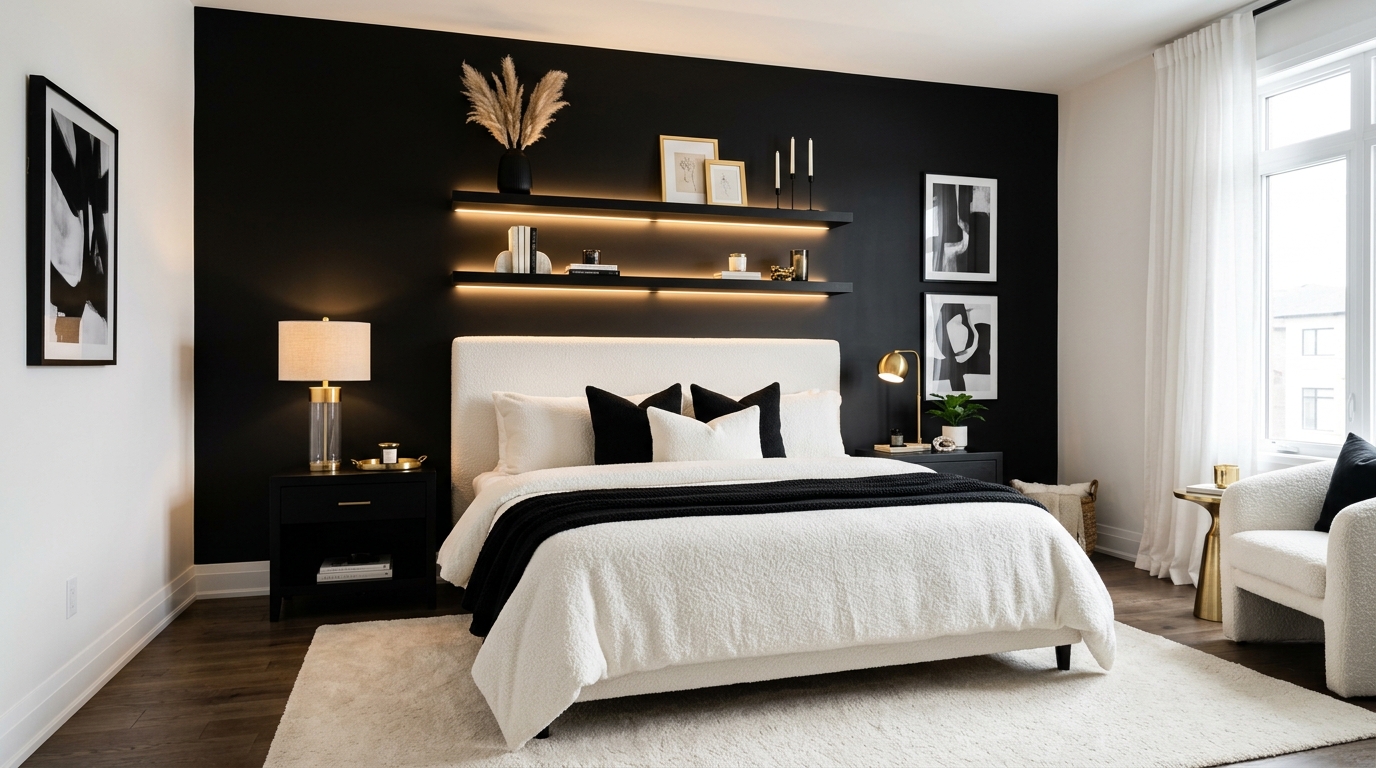
13. Matte black feature wall — An even bolder version of the dark-accent idea, working especially well when paired with lighter furniture for contrast.

14. Deep green or burgundy accent — Less common than navy or charcoal, but effective for a richer, more traditional-leaning modern look.

15. Two-tone wall (dark lower half, light upper half) — A painted line splitting the wall lets you get the drama of a dark accent without darkening the whole room.

Architectural & 3D Panel TV Walls
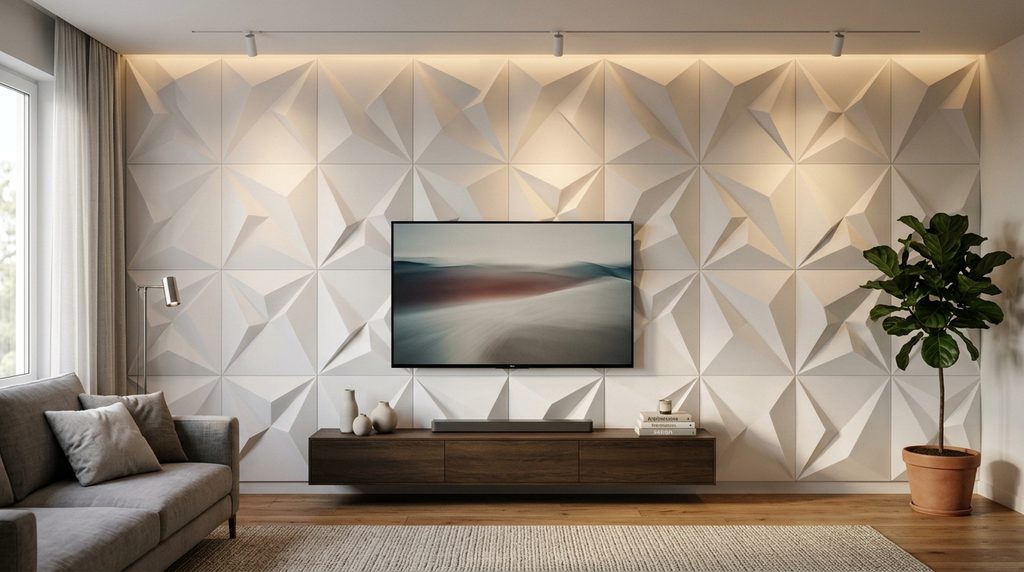
16. Three-dimensional wall panels — Textured geometric panels (commonly MDF, PVC, or wood) installed behind the TV to add depth and a sculptural, architectural feel.
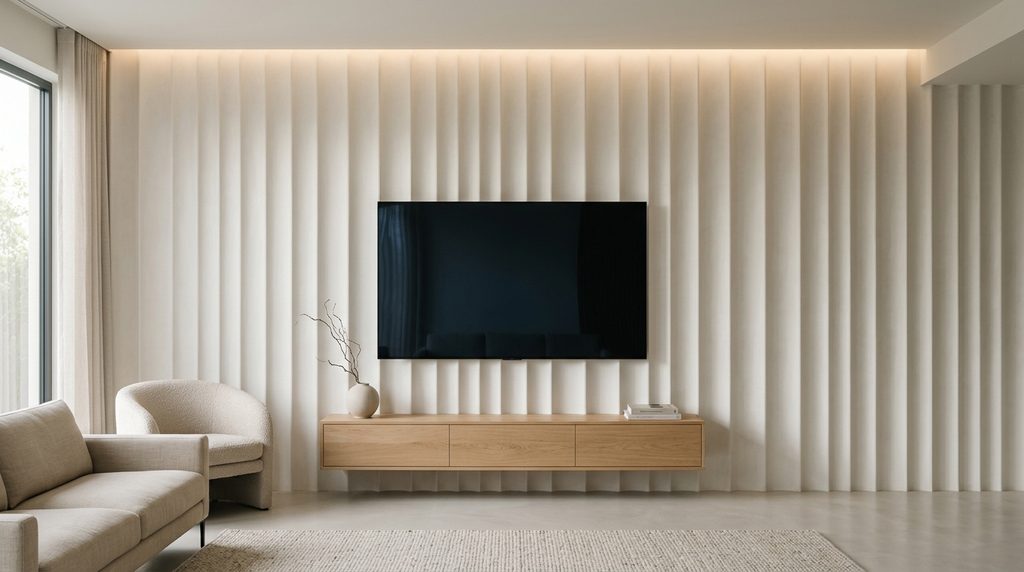
17. Ribbed or fluted panel wall — Rounded vertical grooves running across the wall, giving a softer, more tactile version of a 3D panel look.
18. Full-height media wall in one material — Floor-to-ceiling coverage in a single finish — painted, wood, or textured — turning the whole wall into one deliberate architectural statement rather than a TV plus a backdrop.

19. Multi-level ledge or platform wall — Stepped shelving or platforms extending from the wall to add dimension, useful for layering in storage and display space.

20. Textured plaster or venetian-style finish — A hand-applied textured wall treatment that adds richness and can help soften room acoustics.

Gallery-Wall & Eclectic TV Walls
21. TV as part of a gallery wall — Framed art and photos arranged around the screen so the TV becomes one piece within a larger curated composition, rather than the obvious centerpiece.

22. Mirror-framed TV wall — A decorative mirror frame around the screen that reflects light and helps the black rectangle blend in more when the TV is off.

23. Built-in shelving with display objects — Symmetrical or asymmetrical shelving flanking the TV, filled with books, art, and personal objects for a lived-in, curated look.

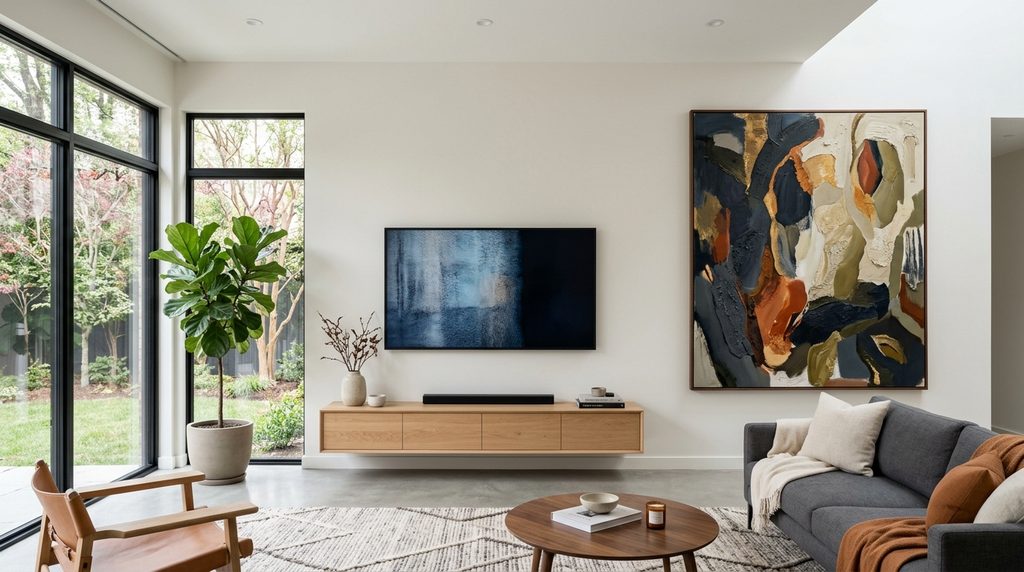
24. Statement art piece above or beside the TV — A single large artwork placed near the screen so the eye has somewhere else to land besides the television itself.
25. Bold peel-and-stick accent wallpaper — A removable patterned or textured wallpaper behind the TV — an easy, non-permanent way to add personality, especially useful for renters.

How to Hide TV Wall Cables
Cable clutter is one of the fastest ways to undercut an otherwise good design, so it’s worth planning for early rather than fixing after the fact.
| Method | How It Works | Best For | Effort Level |
|---|---|---|---|
| In-wall cable management kit | Cables run inside the wall between two low-profile plates | Homeowners doing a proper install | Medium (some drywall cutting) |
| Cable raceway / cord cover | A paintable channel mounted on the wall surface | Renters or anyone avoiding wall cuts | Low |
| Behind a floating console or slats | Cables tucked behind furniture or through slat gaps | Anyone using wood slats or a floating unit | Low–Medium |
| Zip ties and adhesive cable clips | Cables bundled and secured directly to the back of the TV or stand | Quick, low-cost tidying | Very Low |
| Dedicated in-wall power outlet | A new outlet installed behind the TV so no cord runs down the wall at all | Full builds or renovations | High (requires an electrician) |
A general rule: plan the outlet and cable path before choosing the final wall finish, since retrofitting a cable route into a finished wood-slat or panel wall is far more work than planning it in from the start.
Renter-Friendly vs. Permanent TV Wall Ideas
Some of the ideas above are effectively no-commitment, and others assume you’re able to modify the wall structurally. As a quick guide:
- Renter-friendly: floating shelves (built with basic brackets), peel-and-stick wallpaper, cable raceways, freestanding or lightly-mounted consoles, bold paint (with landlord permission).
- Permanent / renovation-level: recessed wall niches, 3D or fluted panels, full wood-slat walls, in-wall cable kits and dedicated outlets, textured plaster finishes.
If you’re not sure which category you’re in, a good test is whether the idea can be fully removed without patching or repainting — if not, treat it as a permanent-style project.
Frequently Asked Questions
How high should you mount a TV on the wall? A common starting point is to center the screen around eye level when seated, often somewhere near 40–42 inches from the floor, though this varies with your seating height and room layout.
How far should you sit from your TV based on its size? A widely used guideline is roughly 1.5 to 2.5 times the screen’s diagonal size, though personal preference and room size will also play a role.
How do you hide cables on a TV wall? Options range from simple zip ties and adhesive clips for a quick fix, to cable raceways for renters, to in-wall cable kits or a dedicated recessed outlet for a fully finished look.
What’s the best material for a modern TV accent wall? Wood slats, painted dark accent colors, and 3D or fluted panels are all popular modern choices — the right one usually depends on whether you want a warmer (wood) or more graphic/architectural (panel, bold paint) feel.
Do TV walls need extra electrical outlets? Not always, but adding a recessed outlet behind the TV during a renovation is a common way to avoid a visible cord running down the wall.
What’s a good TV wall idea for renters? Floating shelves, peel-and-stick wallpaper, cable raceways, and freestanding consoles are all effective options that don’t require permanent changes to the wall.
Conclusion
The most convincing modern TV walls usually aren’t the most expensive ones — they’re the ones where the proportions, height, and cable planning were sorted out before the style was chosen. Once those basics are right, almost any of the 25 ideas above can look genuinely intentional, whether you’re working with a rental-friendly budget or planning a full built-in feature wall.
Sizing, height, and viewing-distance figures above are general guidelines rather than fixed standards, and can vary by room, seating, and personal comfort. For electrical work such as new in-wall outlets, consult a licensed electrician.

One thought on “25 Modern TV Wall Design Ideas for Every Style and Budget”